The model number is the same. The manufacturer is the same. Sometimes even the product photograph is the same.
At Atlantic, we sell restaurant and supermarket equipment that customers can also buy from other dealers. A buyer can take a model number from our website, paste it into Google, and find alternatives in seconds.
For the MAP-covered equipment at the center of this discussion, the similarity goes further: customers can encounter the same model at the same advertised price across dealers. Manufacturers’ Minimum Advertised Price policies shape the competition we face at Atlantic. Simply advertising a lower price is not the lever we can build our strategy around.
That makes the central question of our business unusually clear: if someone can buy the same product at the same advertised price somewhere else, why should they buy it from us?
A more attractive website, a larger advertising budget, or a sentence about exceptional customer service is not enough. Every competitor can make the same claims. We need a difference the customer can actually experience.
The answer I want to build toward is this: we make the purchase easier to understand, easier to complete correctly, and easier to live with afterward.
That is what I mean by Same Product Better People.
What I mean by better people
I do not mean that the people working at another company are less capable or care less about their customers. I mean that we should build an organization in which people can do better work for the buyer.
A knowledgeable employee with inaccurate stock information cannot give a reliable answer. A thoughtful salesperson measured only on closing today’s order may be pushed toward the wrong recommendation. A support team without the authority to resolve a problem cannot compensate for that limitation with friendliness.
Better people, in this context, means people who are better informed, better supported, better connected to one another, and accountable for the outcome of their work. It includes how we treat the team, not just what we expect from it.
This is the standard I want to apply to my work at Atlantic. It is not a claim that every process described here is already in place, or that our results have proved every part of the argument. It is an approach to building a stronger business when exclusive access to the product is not the advantage.
Same product. Same advertised price. Now what?
MAP stands for Minimum Advertised Price: a manufacturer’s policy establishing a floor for the price a dealer may advertise for covered products. When dealers advertise the same model at that floor, the visible product price does not give the buyer a reason to prefer one dealer over another.
The distinction matters: an advertised-price floor is not a claim that every final transaction, shipping charge, or service package must be identical. Coverage and conditions vary by manufacturer. Some policies also address online checkout prices and promotional practices; Star’s published MAP and internet-cart pricing policies illustrate why the applicable policy needs to be checked rather than assumed. This article is about our commercial approach, not an interpretation of every supplier’s rules.
For Atlantic, the strategic starting point is not how to advertise below another dealer or find a workaround. It is how to become the better choice when the advertised equipment price is the same.
That changes the job of the website. If the buyer has already compared the model and price, repeating those two facts does little to distinguish us. The next questions are about confidence: who understands the requirement, whose information is dependable, what will happen after the order, and who will take responsibility for the next step?
Equal advertised prices do not create equal reasons to buy. Our opportunity is to make the reasons beyond price specific, visible, and dependable.
The product is identical. The purchase is not.
The mistake is to treat the item in the box as the entire offer.
Two dealers can ship the same refrigerator while providing very different buying experiences. One makes the customer reconstruct the specifications, discover the delivery conditions late, and repeat the same information to three people. Another helps the customer understand the fit, confirms the uncertain details, and makes responsibility clear.
The equipment has not changed. The work left for the customer has.
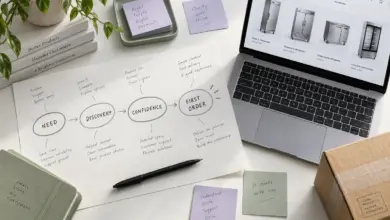
I think about the purchase as a sequence: selecting the right product, understanding the complete offer, receiving what was agreed, and knowing what to do if something needs attention. A competitive website should support that sequence, not just the moment when money changes hands.
For a restaurant owner, a refrigerator belongs to a working business. The purchase may involve an opening date, a replacement deadline, a delivery location, and other people who need to approve or prepare for it. A product page that ignores those circumstances may describe the equipment accurately and still fail to help the buyer.
We do not need to pretend the product is different. We need to make the difference around it real.
Compete on the uncertainty around the order
When I look at a technical product page, I want to ask what the customer still cannot confidently answer after reading it.
Is this the exact configuration I need? What is included? Does availability refer to a confirmed unit or a supplier estimate? What does delivery cover? What must happen before the equipment can be used? Who can help me verify the questions I cannot answer myself?
Those questions are not interruptions to the sales process. They are the sales process.
Consider an illustrative buyer replacing a commercial refrigerator. Two dealers list the exact same model at the same MAP-compliant advertised price. One page gives the manufacturer description and an ambiguous availability message. The other identifies what is included, explains delivery scope, and provides a clear route to confirm stock and site requirements. The product price has not made the decision. The second dealer has given the buyer more concrete reasons to feel confident about ordering.
That is not a reported Atlantic transaction. It is a useful test of the idea: when the model and advertised price are equal, what have we done to make choosing us easier?
The answer cannot simply be that we care more. It has to be something the customer can see, understand, and rely on.
Not every buyer needs the same kind of help
A repeat buyer who knows the exact model should not have to sit through our expertise. They may need a clear price, dependable availability information, and an uncomplicated order.
A first-time buyer may need help comparing options. A project buyer may need a quote that several people can review. A customer facing an urgent replacement may place more weight on a credible delivery plan than on a long buying guide.
One website needs to make room for those different tasks. I would provide a direct purchase path where appropriate, a useful comparison path, and a clearly scoped route to human help.
Forcing everyone to call is not personal service. Forcing everyone through checkout is not digital efficiency. Both can shift work onto the customer.
The goal is to let the buyer progress independently until a real question requires a conversation, then make that conversation worth having.
A stronger website should make more decisions possible
My definition of a strong ecommerce website is not a site with the most products, the most text, or the most expensive design. It is a site that helps the right customer make a good decision with less unnecessary effort.
For an equipment dealer, I would organize that work around five questions.
Can I find the right starting point?
Search should help someone who knows a model number as well as someone who only knows the type of equipment they need. Category names, filters, and product attributes should reflect meaningful buying distinctions, not only the structure of a supplier’s catalog.
A filter is a promise that the underlying data is reliable. Adding more filters before cleaning that data can make the experience worse: the correct product may disappear because an attribute is missing or recorded differently.
Can I understand the differences?
A comparison is useful when the same attributes appear in the same units and the missing information is acknowledged. Three supplier descriptions pasted side by side are not necessarily a comparison.
Specifications should be paired with explanations of why a distinction matters. The explanation must stay within verified product information. We should help buyers identify questions for their installer or other qualified professional, not suggest that a generic guide can approve a site-specific installation.
Can I tell what I am actually buying?
The exact model, selected options, included components, and exclusions should be clear. For a walk-in cooler, for example, a buyer needs to establish the scope of the particular offer rather than assume every listing represents the same complete package.
Manufacturer documents and verified dimensions matter more here than persuasive adjectives. If a specification is unresolved, the page should lead to confirmation rather than fill the gap with confident copy.
Can I understand the commercial commitment?
Price, shipping scope, applicable charges, availability, and the terms relevant to that order belong near the decision. A shipping estimate is not a guaranteed arrival date. Supplier availability is not necessarily stock in our building. Delivery does not automatically mean placement, installation, or removal of old equipment.
We should describe what is actually offered and make any remaining calculation or confirmation explicit. Hiding uncertainty does not remove it. It postpones the moment when the customer discovers it.
Can I get help without starting again?
A product inquiry should carry the product and selected configuration into the conversation. A returning customer should be able to identify an order without searching through unrelated screens. A form should ask for enough information to route the request, not demand a full project specification from someone who is still learning what matters.
These are practical information-design decisions. Baymard’s product-page usability research documents how resolvable interface problems can cause shoppers to abandon otherwise suitable products. That does not predict a particular sales lift for Atlantic, but it reinforces why helping people evaluate the product deserves serious attention.
SEO should bring a buyer to a useful answer
Search visibility matters to this model. A company cannot demonstrate its value to a customer who never encounters it. But reaching the customer is the beginning, not the completed outcome.
A model-number search, a category search, and a planning question are different entry points. I want the landing page to respect those differences. A precise product search should lead to precise product information. A category such as commercial refrigerators should support selection. A planning question may need a guide before a product recommendation makes sense.
The content opportunity is not to rewrite the same manufacturer paragraph more elegantly than everyone else. It is to answer the questions that paragraph was never designed to answer.
That might mean a documented comparison, a clear explanation of delivery options, original photographs showing relevant details, or a guide to preparing the information needed for a quote. The content must be accurate and maintained, not just original.
This is where ecommerce content marketing becomes part of service. A useful explanation can help someone before a call, improve the call itself, and remain available afterward.
Expertise should survive beyond one conversation
A business has a problem if its best answers exist only in the memory of its most experienced employee.
That employee becomes a bottleneck. New colleagues struggle to learn. The website stays incomplete. Customers receive different answers depending on who happens to pick up.
I want a simple loop between the people doing the work and the information the business publishes:
- A customer asks a meaningful question.
- The appropriate person verifies the answer and its limits.
- The answer is recorded with its source and review owner.
- It improves the relevant page, quote template, or internal resource.
- Later conversations reveal whether that explanation actually helped.
Private customer information does not need to become public content. The recurring question can be separated from the person who asked it.
AI can help organize these questions or draft an explanation from approved material. It should not invent a product specification, make up a delivery promise, or turn a tentative answer into a guarantee. The person responsible for the information remains responsible when a tool helps write it.
The purpose of the website is not to replace our best people. It is to make their knowledge useful more often.
The handoff is part of the product we sell
Customers experience one company. Internally, that company may divide the work among marketing, sales, purchasing, fulfillment, and support. The gap between those two realities is where a great deal of avoidable frustration can develop.
A marketing promise must remain true in the quote. A sales commitment must be visible to the person arranging fulfillment. A support conversation must have access to what was originally agreed.
I would treat the important facts of an order as a shared record: the exact product and configuration, confirmed requirements, quoted scope, unresolved questions, customer commitments, and the person responsible for the next step.
Access should be limited to the people who need it, and the record should not become an excuse to collect unnecessary personal information. The objective is continuity, not surveillance.
A customer should not have to become our internal project manager. When we ask them to repeat information we already have, we expose a cost of dealing with us that does not appear in the price.
Make the real business visible online
Atlantic’s website presents a physical showroom and warehouse in Kearny, New Jersey, alongside its online catalog. That gives us real material to work with, not just another brand story to write. Atlantic’s website provides the public context for the business discussed here.
The opportunity is to show relevant products, real people, and the work behind an order. An original photograph of a control panel, a careful comparison of two configurations, or a specialist explaining a common question can provide evidence a generic banner cannot.
But we should be precise about what that evidence proves. A warehouse photograph does not prove that a specific model is available today. A showroom does not remove every fulfillment risk. A staff portrait does not demonstrate expertise by itself.
Visibility should support verification. Show the team, then show how to reach the right person. Show a product, then identify the model. Show a capability, then explain its actual scope and availability.
Our physical presence can strengthen the website when it makes the business easier to understand, not when it becomes another unsupported reason to trust us.
Win the choice, not a price war
In the MAP-constrained competition I am describing, our task is not to defend a higher equipment price or promise to undercut everyone. It is to give the customer a stronger reason to choose Atlantic at the same advertised product price.
Price transparency still matters. The same advertised equipment price does not tell a customer whether freight, delivery options, accessories, or other relevant charges are included. We should make the actual scope clear rather than let a familiar headline price hide an incomplete offer.
But explaining total cost is different from making discounting the strategy. The advantage I want to build is accurate information, credible availability, useful advice, clear handoffs, and support that follows through. These should help a buyer choose us without needing a lower advertised price.
Nor does matching the advertised price guarantee an order. A buyer may prefer an existing supplier, a better-suited delivery option, or a dealer that has earned their trust. We still have to earn the decision.
That work has to make economic sense for us. MAP does not make specialist time, training, technology, or problem resolution free. Better information and better processes should help us provide useful service sustainably, not attach unlimited assistance to every order. A service promise that the business cannot sustain will eventually become a broken promise.
I want an offer we can deliver consistently, not an impressive promise that depends on everyone working beyond reasonable limits.
Do not build the experience around employee heroics
If one person has to rescue every difficult order, we have a dependency, not a durable advantage.
People need time to learn the catalog, access to reliable information, clear escalation routes, and boundaries around what they can promise. They also need permission to say that they do not know yet, then find the answer.
I would rather have a customer receive an honest confirmation process than an immediate answer that later turns out to be wrong. Speed matters, but we should distinguish speed to acknowledgment from speed to a verified answer.
Incentives matter too. If we reward only order value, we should not be surprised when accuracy, handoffs, and after-sales work receive less attention. The business needs to recognize the work that prevents problems, even when no one can point to a dramatic recovery story.
Better people is a responsibility for leadership. It cannot be a slogan that asks employees to compensate for weak systems.
The sale does not end when payment clears
Before a purchase, we ask a customer to believe our explanations. Afterward, they get to compare those explanations with what actually happens.
Order confirmation should reflect the agreement. Updates should distinguish what is confirmed from what is estimated. Relevant preparation information should arrive before the customer needs it. When something changes, the next action and the responsible person should be clear.
We also need to explain the boundary between dealer assistance, manufacturer warranty terms, carrier processes, and any separately arranged service. Helping someone navigate that boundary is valuable. Promising control over everything is not.
A problem is not an opportunity to deliver a rehearsed speech about how much we care. It is a test of whether we can establish the facts, explain the options, and follow through.
This is where the next recommendation or future order may begin. It is also where we learn what the website and sales process should have made clearer earlier.
Measure the business, not just the checkout
If we want to sell more of the same products, we need a definition of more that does not reward the wrong behavior.
More completed checkouts can coexist with more cancellations. More quote requests can coexist with less qualified demand. Higher revenue can coexist with lower contribution after fulfillment and support costs.
I would review a small set of connected measures:
- Decision quality: recurring unanswered questions, specification corrections, and suitability-related cancellations or returns.
- Commercial progress: qualified quote-to-order conversion, completed orders, and time to a meaningful customer response.
- Promise reliability: availability corrections, missed commitments, and how long unresolved issues remain open.
- Economics: contribution after the relevant product, fulfillment, acquisition, and service costs, using a consistent definition.
- Relationship quality: repeat business over a purchase cycle appropriate to the category, referrals where observable, and specific customer feedback.
A restaurant does not need another refrigerator on the same schedule it needs consumables. Retention measures must respect that difference.
Online, phone, quote, and showroom activity should be connected where the available systems and customer permissions allow it. Do not count the same order twice because it touched two channels. Do not call every assisted transaction proof that one content page caused the sale.
For a change to the website, I would record a baseline and a specific hypothesis. Where there is enough traffic, a controlled test can help. Otherwise, compare carefully and document changes in price, stock, seasonality, and traffic mix. Improvement after a redesign is not, by itself, proof that the redesign produced it.
Where I would start: one category, one better buying journey
I would not begin by redesigning the entire store. I would choose a category that matters commercially and trace the journey from first visit to after-sales support.
Start with a manageable group of products. Read the pages, check the underlying data, review permitted customer questions, and ask the people handling orders where misunderstandings occur. Follow an inquiry through the handoffs rather than reviewing each department in isolation.
Then choose one repeated source of uncertainty. Perhaps the offer scope is unclear. Perhaps customers cannot compare configurations. Perhaps the quote form loses the product context. Fix the information and the workflow together.
For each change, I would write down four things: the customer problem, the evidence we need, the owner of the answer, and how we will know whether the change helped. Publish only promises the operation can support.
Review what happened before expanding the approach. Did questions become more specific? Did unsuitable orders decline? Did the team spend less time recovering missing information? Did the economics improve, or did the extra service simply add cost?
The point is not to make a small improvement look like a transformation. It is to establish a way of working that can survive beyond the first enthusiastic week.
The advantage I want to build
A competitor can list the same model at the same advertised price, copy a paragraph, add a chat button, and buy the same theme. Those things can matter, but they are not the whole business.
What I want to build is the connection between accurate information, thoughtful people, a useful website, and reliable follow-through. None of those elements is exclusive to us. Making them work together consistently is the work.
I have previously written about retailers that create value around products other companies also sell. The question here is more personal: what standard should I use when deciding what we build next?
Not whether the website looks busier. Not whether we have repeated our commitment to service loudly enough. When the product and advertised price are the same, have we given the customer a meaningful reason to choose us?
Did we help the customer make a better decision, and did we deliver what that decision depended on?
If we can do that more consistently, customers have a reason to choose us that is not printed on the manufacturer’s label.
Same product. Better people.